
Moisture Matters: One of the Most Overlooked Keys to a Longer, Healthier Life
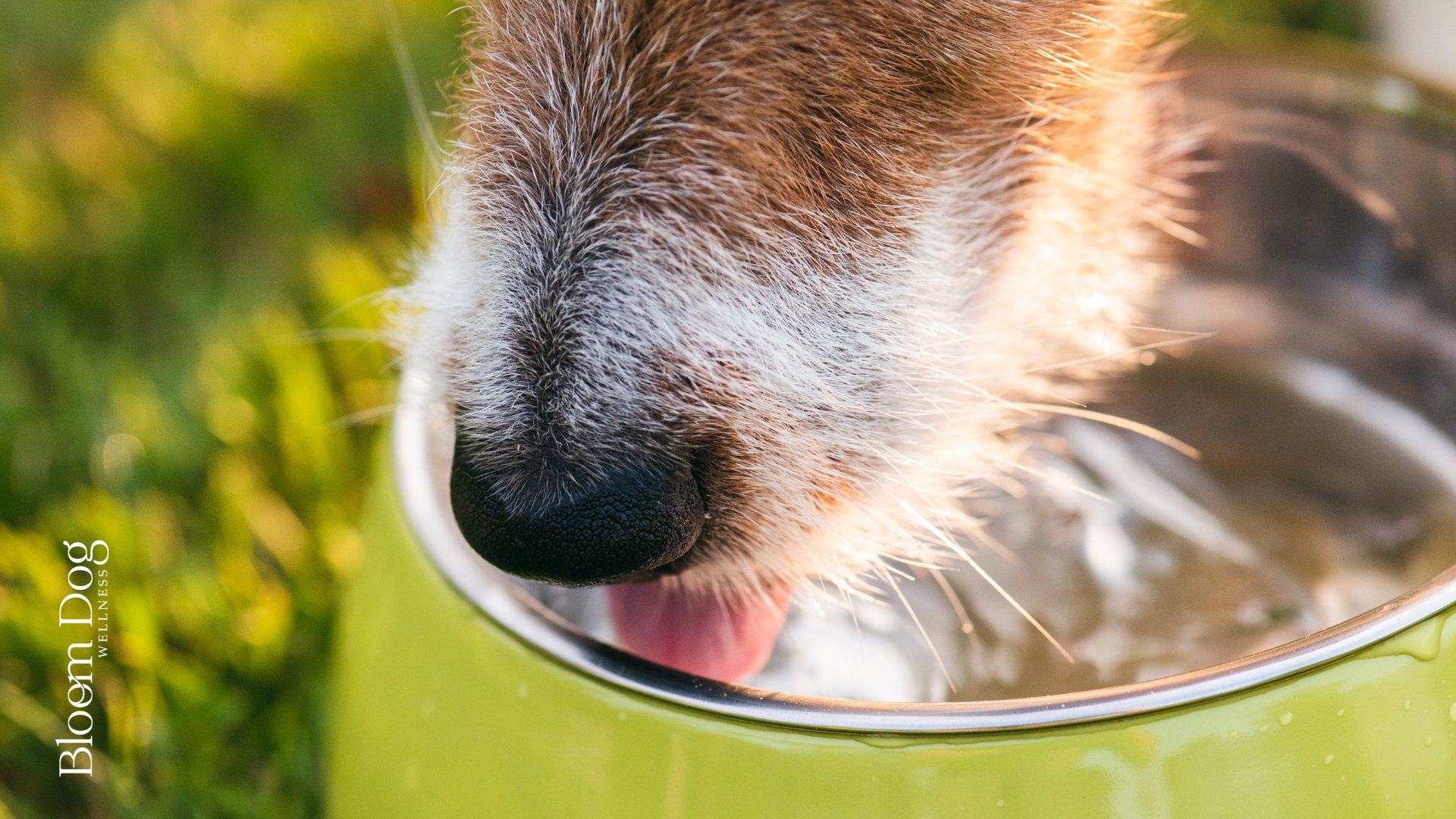
When we think about keeping our dogs healthy during the summer, we often focus on staying cool, avoiding hot pavement, and making sure they have access to fresh water. Those things absolutely matter—but there is another piece of the hydration puzzle that doesn't get nearly enough attention.
Moisture in the diet.
I sound like a broken record because I talk about this all day, every day. As many of you know, I manage The Whole Dog Market, a holistic pet food store in Homewood, and this is a conversation I have repeatedly with customers.
Moisture. Moisture. Moisture.
If there is one thing I wish I could get every pet parent to understand, it's just how important moisture is to the body—and why simply having a bowl of water available isn't the same as feeding a moisture-rich diet.
A 2025 veterinary review published in Cells, The Emerging Role of Water Loss in Dog Aging, really reinforced for me just how important hydration is throughout a dog's life, and especially as they age. The researchers discuss how total body water decreases with age and how changes in thirst response and kidney function can make older dogs more vulnerable to dehydration. They even propose considering hydration a fourth pillar of geriatric nutrition, alongside protein, fat, and fiber.
Why This Matters for Dogs
One of the biggest reasons I encourage fresh, moisture-rich food is because I believe many dogs—especially those eating completely dry diets—aren't getting enough moisture through their food. Whenever possible, I recommend high-quality fresh food from the freezer, whether raw or lightly cooked, along with moisture-rich additions like raw goat milk, bone broth, and fresh whole-food toppers.
And even high-quality canned food can be a step in the right direction simply because of its naturally higher moisture content.
Kibble contains very little moisture—typically around 8–10%.
Fresh food, on the other hand, naturally contains around 65–80% moisture, much closer to what a dog's body was designed to consume.
Dogs didn't evolve eating dry pellets.
Think about this for a minute: What if we ate dry cereal for every meal, every day, for our entire lives—and expected a bowl of water on the side to make up for it?
Let that sink in.
Yet that's essentially what we ask of many of our dogs. We expect their bodies to stay hydrated, healthy, and resilient while feeding them a diet that contains very little moisture.
Biologically, dogs evolved from eating prey. That prey supplied not only protein and fat, but also blood, organs, connective tissue, and all the water naturally contained within those tissues. Their hydration came largely from their food.
Our dogs may not be hunting their meals today, but their biology hasn't changed.
"But My Dog Drinks Plenty of Water..."
This is something I hear all the time. Dogs eating dry food often drink more water to compensate for the lack of moisture in their meals—but that doesn't necessarily mean they're optimally hydrated.
Hydration isn't just about having access to a water bowl. Food is an important source of water, too.
A Quick Word About Freeze-Dried Food
I love freeze-dried food, and so do most dogs. The problem is that many dogs prefer it dry, and the bag often tells us it's perfectly fine to feed it that way.
I 100% believe freeze-dried food should be rehydrated.
I find myself having this conversation often with clients. Just because we don't add moisture doesn't mean the food doesn't still have to be rehydrated once it enters the body. The digestive process requires fluid to soften, break down, and move that dry food through the GI tract—and that fluid has to come from the body's own water supply.
We know that inadequate hydration can negatively affect virtually every system in the body. So if I can put the moisture back into that food before I feed it, rather than asking my dog's body to give up its own water meal after meal, that's an easy decision for me.
One easy way to do this is to portion out your dog's freeze-dried food the night before, add plenty of liquid, and let it rehydrate in the refrigerator overnight. Or prepare it in the morning for that evening's meal. This gives the food plenty of time to absorb the moisture before it ever enters your dog's body. This is how I personally feed freeze-dried food.
Why Moisture Becomes Even More Important as Dogs Age
As our dogs get older, their bodies become less resilient.
Their kidneys have worked hard for years. Their joints contain less cushioning. Their skin loses elasticity. Their metabolism changes. And every organ in the body depends on adequate hydration to function efficiently.
This is where the study I mentioned earlier really hit home for me. The researchers discuss how dogs naturally lose total body water as they age, while changes in thirst response and the kidneys' ability to concentrate urine can make maintaining hydration more challenging. To me, that's even more reason to be proactive about getting moisture into our senior dogs rather than simply waiting for them to drink.
Supporting hydration through food is one of the simplest ways we can help support normal kidney function, healthy digestion, circulation, nutrient delivery, temperature regulation, and overall cellular health.
It isn't a magic cure—but I believe it is one of the most foundational things we can do for our dogs as they age.
Easy Ways to Add More Moisture
You don't have to completely change your dog's diet to start increasing moisture. Sometimes it's as simple as adding more liquid to the bowl.
Try adding filtered water, bone broth, or raw goat milk to meals. If you feed kibble, you don't necessarily have to pour liquid over it—try offering your dog a bowl of raw goat milk before their meal instead.
You can also incorporate moisture-rich whole-food toppers. Green Juju's frozen blends are one of my favorites because they combine a variety of fresh vegetables with bone broth, adding both moisture and beneficial fiber to the bowl. I like to think of it as juicing for dogs—the vegetables are finely processed, helping break down the plant material and making those whole-food nutrients easier for our dogs to digest and utilize. (Green Juju frozen blends are available at The Whole Dog Market in Homewood.)
During the warmer months, moisture-rich whole foods like watermelon (minus the rind) and cucumber can also make refreshing additions or treats. Cucumber has the added benefit of being a naturally cooling food, making it especially nice during the hot summer months.
If you're feeding raw or gently cooked food from the fridge, warm up some water or bone broth and give the meal a warm moisture bath before serving. It's an easy way to take the chill off food straight from the refrigerator while adding even more hydration at the same time.
I believe the days of tossing some dry kibble into a bowl, walking away, and believing that's all our dogs need are way behind us.
Just start adding moisture. Every little bit helps.
Hydration Is More Than Just Water
Here's another piece of the hydration puzzle that I think is important: water is only part of the equation. Minerals and electrolytes matter, too.
Electrolytes like sodium, potassium, magnesium, and chloride help regulate fluid balance and the movement of water between the spaces inside and outside of cells. Ultimately, cellular hydration is the goal—we don't just want our dogs drinking water; we want their bodies to be able to maintain and utilize that water appropriately.
This is especially worth thinking about if you use highly purified water. Reverse osmosis filtration, for example, removes most of the naturally occurring minerals from water along with the things we're trying to filter out. I personally prefer to add minerals back into highly filtered water rather than continually offering mineral-depleted water.
One product I use and recommend for this is BEAM Minerals. They now have mineral and electrolyte formulas specifically formulated for dogs and cats, which makes it easy to add that mineral support back into their diet and hydration routine.
You can use code BLOOMDOG for 20% off your order, and I'm hoping to have BEAM's pet products available through the Bloom Dog Wellness online store soon!
The Bottom Line
Hydration is foundational to health. Every cell, tissue, and organ in the body depends on adequate water and fluid balance to function the way it should.
And that's really the bigger message here. This isn't just about adding water to food. It's about supporting the body throughout an animal's lifetime. It's about resilience, healthy aging, quality of life, and giving the body what it needs to function as well as possible for as long as possible.
We can't prevent every disease or control how long our dogs will live. But we can pay attention to the foundational things that support their bodies every single day—and I believe hydration is one of them.
Especially as our dogs age, this is something I think every pet parent should be thinking about more.
Because over a lifetime, the little things we do every single day can make a big difference.