
Eli taught me so much during the nearly 15 years I was lucky enough to have him, and I've always believed that sharing our experiences can sometimes help other animals and their families.
During his final year, Eli experienced pancreatitis for the first time. I'm not going to get into all the different causes of pancreatitis because that's not what this article is about. I do want to emphasize that pancreatitis isn't always about fat. While dietary fat can certainly be a trigger, there are other factors that can contribute to both acute and chronic pancreatitis.
What I really want to share is what helped Eli once he was through the critical stage, how I supported his digestive system, and the things that helped keep him comfortable and enjoying a good quality of life.
But before we go any further, something important: If you suspect your dog or cat has pancreatitis, please seek veterinary care immediately. Pancreatitis can be extremely painful and potentially life-threatening. Vomiting and diarrhea can quickly lead to dehydration, and some animals may need fluids, pain medication, anti-nausea medication or hospitalization.
I raise my animals as naturally as possible, but there are times when veterinary intervention is absolutely necessary, and pancreatitis can be one of them. Please don't try to manage a potentially serious pancreatic episode at home without veterinary guidance. Once your animal is stable, that's when we can focus on supporting their recovery and digestive health.
What I Fed Eli During a Pancreatic Flare
One thing I've learned from veterinarians like Dr. Karen Becker is that research supports feeding dogs with pancreatitis as soon as they're stable and able to tolerate food, rather than withholding food unnecessarily.
If Eli's episode involved vomiting, my first priority was getting that under control. Once he was stable and ready to eat, I would start with something incredibly simple: lean, low-fat ground turkey and plain pumpkin, mixed about 50/50 and offered in smaller, more frequent meals throughout the day. That worked beautifully for him!
When it was time to transition to a complete and balanced diet, I was so thankful for Raised Right's Pancreatic Support diet, formulated by Dr. Karen Becker and Dr. Barbara Royal.
Raised Right has been one of my favorite gently cooked food brands for quite some time. A few years ago, they introduced their Pancreatic Support and Kidney Support diets, and I've watched these foods support so many animals. That has truly been a blessing.
Eli rotated between their Pancreatic Support Turkey, Beef and Pork recipes, and he loved them! These diets provide moderate protein, lower fat and a good amount of fiber, making them a wonderful option for dogs needing nutritional support during pancreatic recovery.
And here's something I really want pet parents to understand: there are options beyond conventional prescription diets. Fresh, minimally processed foods can still be part of the conversation when choosing an appropriate diet for your dog.
As Eli improved, I gradually began incorporating Raised Right's Original formula, and thankfully, he tolerated the moderate fat content well. A dog with chronic or recurring pancreatitis may not be able to make that same transition, but Eli could.
A diagnosis of pancreatitis doesn't automatically mean your dog can never eat moderate amounts of fat again. Some dogs need long-term fat restriction, particularly those with chronic or recurring pancreatitis, while others may eventually tolerate a gradual return to a more moderate-fat diet.
Every animal is different, and understanding what may be contributing to their pancreatic episodes can help us make better decisions about how to support them.
Interested in trying Raised Right for your dog? We stock their Original, Pancreatic Support, and Kidney Support formulas at Whole Dog Market, or you can click here to order your first case and save!
Getting Through the Episode Isn't Where Support Ends
Once Eli was stable, I wanted to support his pancreas and the rest of his digestive system, not simply change his food and hope for the best.
I've followed research and discussions among integrative veterinarians about supporting pancreatic health through nutrition, digestive enzymes and omega-3 fatty acids. There is some encouraging research, including human studies showing that omega-3s can help reduce inflammation associated with pancreatitis and that pancreatic enzyme supplementation may support digestion and recovery. These were approaches I wanted to incorporate into Eli's care once he was stable.
Digestive enzymes became part of his daily routine. The pancreas produces enzymes that help break down proteins, fats and carbohydrates, and supplementing with pancreatin was one way I supported Eli's digestion. I gave enzymes with every meal, and one of my favorite products was Adored Beast's Healthy Gut. I felt it made a meaningful difference in how well he tolerated his food.
I also incorporated omega-3 fatty acids once Eli was stable and eating comfortably. EPA and DHA have well-studied anti-inflammatory properties, and research in humans with pancreatitis has shown encouraging results in reducing inflammatory markers and supporting recovery. I love Nordic Naturals' pet line of omega-3 products, which we carry at Whole Dog Market. Through Bloom Dog Wellness, I also offer a high-quality Antarctic krill oil, and for animals who don't tolerate fish oil, I carry an algae-based omega-3 option.
Another product I was incredibly thankful to have on hand was Your Go-To, a homeopathic preparation of Arnica and Aconite. Arnica is traditionally used in homeopathy for pain, bruising and physical discomfort, while Aconite is used for trauma, shock, gastrointestinal upset and stress, which often accompanies pain.
Whenever I noticed Eli beginning to hunch his back, one of his early signs of discomfort, I would give him two squirts directly into his mouth. Within minutes, I often noticed him becoming more comfortable. This became such a valuable ally for me because it gave me something to turn to while I assessed what was happening and figured out our next move.
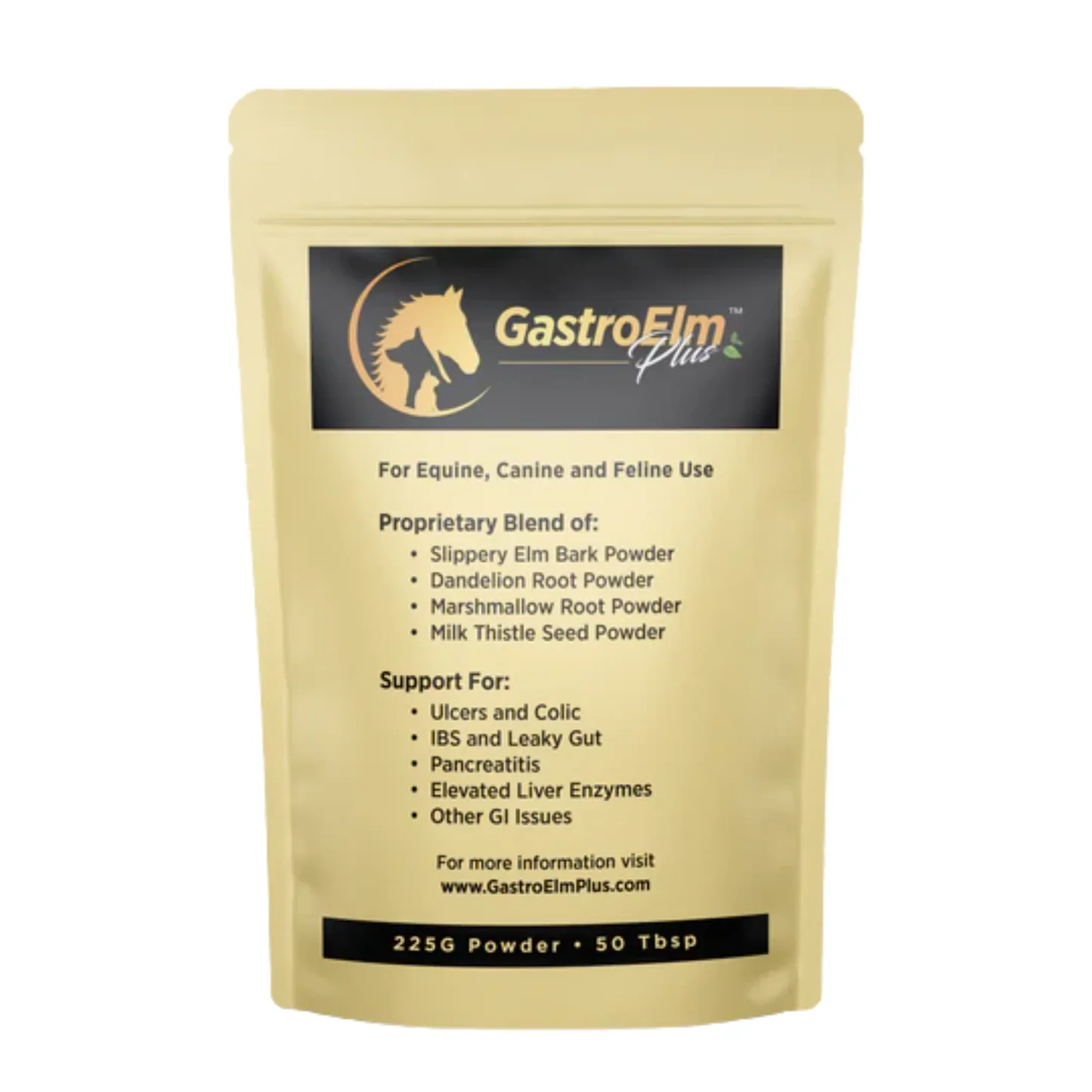
And there's one other product that became a particularly special part of Eli's digestive-support routine, one I want to share a little more about because of the difference I saw it make for him: Gastro Elm.
The One Thing That Gave Eli So Much Relief: Gastro Elm
Of all the things I used to support Eli's digestion, Gastro Elm became one of my absolute favorites! I cannot tell you how thankful I was to have this product on hand.
Once Eli was stable after a pancreatic flare, I would turn to Gastro Elm to help soothe his irritated digestive tract. I could see how much more comfortable his little tummy seemed to be, and one of the biggest things I noticed was how it helped with his watery diarrhea. His stools would begin to firm up instead of everything rushing through him.
When he was still experiencing digestive upset, I would give it twice a day, away from meals. Once he was feeling better, we continued using it every evening as a little bedtime snack. I had noticed that sometimes Eli's tummy would start making those gurgling noises, which often led to nausea. But once we made Gastro Elm part of his bedtime routine, those episodes stopped. He would sleep comfortably through the night and wake up without nausea. That little bedtime snack became something I was so thankful for!
What makes Gastro Elm so soothing? It combines four herbal ingredients: slippery elm, marshmallow root, milk thistle seed and dandelion root. When mixed with water or bone broth, the mucilage-rich slippery elm and marshmallow root create a smooth, gel-like consistency that acts almost like an internal bandage, helping coat and soothe the stomach and digestive tract. Milk thistle and dandelion root provide additional herbal support for digestive function.
A little tip: Because the mucilage in slippery elm and marshmallow root may interfere with or slow the absorption of certain medications and supplements, I prefer to give Gastro Elm separately, generally allowing an hour or two between it and meals, medications or supplements. We don't know exactly how much it may affect absorption, but I like to err on the side of caution, especially when I'm giving other supportive supplements that I want my dog to benefit from.
What I love about Gastro Elm is that its soothing herbal ingredients can support the gastrointestinal tract in so many different situations, not just during recovery from pancreatitis. It can be used as part of digestive-support routines for animals dealing with gastrointestinal irritation and more complicated issues such as ulcers, inflammatory bowel conditions and intestinal lining concerns.
Gastro Elm isn't a treatment for pancreatitis itself, but supporting an irritated digestive tract can be an important part of helping an animal feel more comfortable.
I became so passionate about Gastro Elm because of what I saw with Eli that I decided to carry it through Bloom Dog Wellness. Since then, I've had the opportunity to share it with so many other animals needing additional digestive support.
Sometimes it's the simple things we do consistently that make such a meaningful difference in our animals' quality of life. And for Eli, that little evening snack was one of them.
A Final Thought
One thing I want pet parents to understand is that a single episode of pancreatitis doesn't necessarily mean your dog will ever experience another. In the early 2000's, before I knew better, I gave my greyhound a poorly sourced pig ear from one of the big box pet stores, and she developed acute pancreatitis and had to be hospitalized. Thankfully, she recovered and never had another episode!
But some dogs, and many cats, experience recurring or chronic pancreatitis. Sometimes the inflammation can be quiet, smoldering behind the scenes without obvious symptoms. If your dog or cat continues to experience pancreatic flares, being proactive is so important. Learn to recognize those subtle signs that something isn't right, and pay attention to changes in their behavior or digestion. If symptoms persist or become severe, veterinary care may be necessary to help them through the more critical moments. And once they're stable and back home, having a plan to support their digestive health is so important. That's exactly what I'm here to help with!
Something else I don't see discussed nearly enough is rechecking pancreatic lipase after a pancreatitis diagnosis. Once your animal's symptoms have subsided and their digestion has settled, consider following up with testing to see whether pancreatic lipase has returned to normal or remains elevated. Symptoms improving doesn't always mean everything has completely resolved, and follow-up testing, alongside their clinical progress, can help provide a clearer picture of what's happening.
Eli was nearly 16 years old and living with a large splenic tumor that we believed was contributing to secondary issues, including his pancreatitis. At that stage of his life, I focused on finding ways to keep him comfortable, support his digestive system and preserve the quality of life he deserved.
And that's really why I wanted to write this. I know there are other pet parents out there navigating something similar. Maybe their dog isn't dealing with a tumor like Eli was, but they're looking for ways to support their animal beyond simply getting through the next flare. Whatever may be contributing to their pancreatitis, many of the nutritional and digestive-support approaches I've shared here may be worth exploring as part of an individualized plan.
I hope sharing Eli's experience gives you some ideas, encourages you to ask questions and helps you feel more confident supporting your own animal.
Knowledge is power. And when we know better, we do better. 🤍